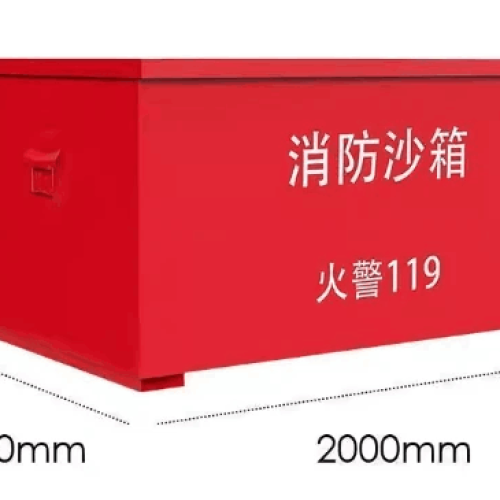
The national standard fire sandbox is manufactured in strict compliance with fire protection regulations and emergency firefighting standards. It is dedicated storage equipment for storing fire-fighting yellow sand and emergency firefighting in various locations. It can be purchased in bulk to meet emergency firefighting needs in various scenarios. The core function of the product is to seal and dry-store fire-fighting yellow sand, preventing it from becoming damp, caking, or scattering, ensuring quick access in emergency situations to extinguish oil fires, electrical fires, and initial fires that should not be fought with water. It effectively solves the pain point of fire-fighting yellow sand being piled up randomly, prone to moisture, and inconvenient to access. The box body is made of high-quality cold-rolled steel plate, stainless steel, or fiberglass, with anti-corrosion plastic spraying or polishing on the surface. It is sturdy, corrosion-resistant, and wear-resistant, suitable for both indoor and outdoor environments. It has excellent moisture-proof performance, effectively isolating moisture from the air to prevent the yellow sand from caking and becoming ineffective. The structure is scientifically designed with a convenient sand access port and a sealed cover plate, allowing quick access to the sand while effectively preventing dust and moisture. Some models are equipped with carrying handles or casters for easy mobility. Installation requires no complex construction; it can be placed directly in the designated position. It comes with complete certifications and relevant test reports, combining practicality and safety. It is essential emergency firefighting storage equipment for factories, gas stations, warehouses, chemical parks, and other locations.
Usage instructions and operating procedures: When placing, choose a position that is easy to access, unobstructed, dry, and well-ventilated, away from fire sources, power sources, and flammable or explosive areas. Avoid low-lying damp places. If equipped with casters, step on the brake device to secure the position, ensuring the box is stable and not loose. Post a "Fire Sandbox" warning sign to ensure it is conspicuous and easy to identify. When filling with sand, use dry, clean, impurity-free fire-fighting yellow sand. Fill evenly to the specified level, not exceeding 80% of the box capacity. After filling, close the sealed cover plate to ensure a tight seal to prevent moisture and caking. During daily use, periodically open the cover plate to check the condition of the sand. If the sand is found to be damp or caked, dry it in the sun or replace it promptly to keep the sand dry and loose. Check the box body for damage, rust, or sand leakage, and check whether the sealing cover plate is intact. If damaged, repair or replace it promptly. Clean the surface dust and surrounding debris to ensure the sand access port is unobstructed for emergency use. In an emergency, quickly open the sealing cover plate, take sand through the access port, and directly cover the fire source surface to cut off oxygen and extinguish the fire. When fighting oil fires, first cut off the fire source, then evenly cover with sand until the flames are completely extinguished. When fighting electrical fires, first cut off the power supply before extinguishing. After use, replenish the sand to the specified capacity, close the sealing cover plate, and tidy up the surrounding environment. For daily maintenance, regularly check the anti-corrosion coating and sealing performance, conduct a comprehensive inspection quarterly, remove impurities inside the box, and replace damp sand. It is strictly forbidden to disassemble or damage the box and accessories at will, to use the fire-fighting sand for non-firefighting purposes, or to pile debris or flammable or explosive items around the box, ensuring the fire sandbox is always in good emergency condition. Service hotline: 130-6003-1111