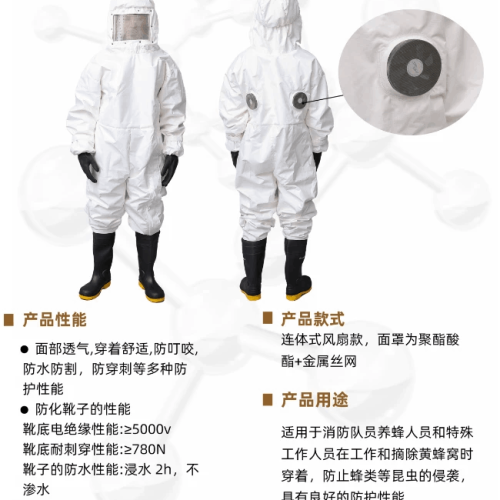
Sting-proof full-body suit for hornet nest removal and rescue-from-wasp-attack response.
Values are industry-standard ranges; final configuration subject to scheme design.
| Standard | Complies with industry standards for emergency rescue protective equipment and relevant safety standards for bee protection. |
| Product Category | Full-sealed bee protective suit, lightweight bee protective suit (optional), one-piece bee protective suit. |
| Core Parameters | 1. |
| Fabric | Special bee-protective fabric (fine Oxford cloth + anti-sting coating), breathable and waterproof, wear-resistant and scratch-resistant, thickness 0.2-0.3mm. |
| Style | Full-sealed one-piece style (with built-in hood), equipped with high-definition transparent anti-fog face shield, elastic sealing cuffs and pant legs, Velcro neck seal. |
| Protective Performance | Protects against bee stings, scratches, and wear; waterproof and stain-resistant; face shield is anti-fog and scratch-resistant with clear vision; effectively prevents bee stings from penetrating. |
| Sizes | Sizes M-XXXL to fit emergency rescue personnel of different body types, unisex 5. |
| Weight | Single suit ≤2.0kg, lightweight design, no burden to wear, easy for flexible operation 6. |
| Environmental Adaptability | Operable normally from -10℃ to +50℃, resistant to aging and abrasion, breathable and non-stuffy |
| General Parameters | Service life ≥3 years (based on usage frequency), reusable, compatible with anti-bee gloves and anti-bee boots, available from stock and customizable, suitable for various bee incident emergency handling scenarios |
Certification: Test Report, Factory Certificate of Conformity · Customization (explosion-proof, anti-corrosion etc.) available
The bee suit complies with industry regulations and relevant safety standards for emergency rescue protective equipment. It has passed professional bee sting resistance tests, ensuring reliable quality and protective performance. It is the dedicated protective gear for emergency rescue personnel to handle bee infestations and remove beehives, balancing protection, wearing comfort, and practical operability. The product is made of specialized bee-proof fabric that is fine, dense, and tough, effectively preventing bee stings from penetrating. It is breathable to reduce sweating, abrasion-resistant, scratch-resistant, waterproof, and stain-resistant, preventing discomfort from heat that could affect operations during rescue. It features a fully enclosed one-piece design with a dedicated bee-proof mask (high-definition transparent, anti-fog, and scratch-resistant) that fully protects the rescuer's head, face, torso, and limbs. The mask provides a clear field of vision without affecting observation and operation. The cuffs and pant legs are equipped with elastic sealing bands, and the collar uses a sealed Velcro design to effectively prevent bees from entering. The overall lightweight design allows for easy donning, and the flexible tailoring at the joints does not hinder bending, stretching, or other rescue movements. It is suitable for various emergency scenarios such as handling bee infestations disturbing residents, removing beehives, and outdoor bee-related rescue, providing rescuers with comprehensive bee protection to ensure safety during bee-related operations.
Instructions for Use and Operating Procedures: Storage and Maintenance - Store in a dry, ventilated, cool place away from direct sunlight, high temperatures, moisture, open flames, and sharp objects. Avoid prolonged exposure to sunlight, compression, scratching, and tearing to prevent damage to the fabric, degradation of sealing performance, and wear or fogging of the mask. - Regularly inspect the bee suit for any tears or scratches on the fabric, check that the mask is clear and the anti-fog function is working, and verify that the sealing bands and Velcro are still effective. Repair or replace any damaged parts promptly. - The suit should be managed by designated personnel, stored in the designated area of the emergency rescue equipment warehouse, and organized by category. A usage log should be maintained. It is strictly prohibited to place randomly, lend, or use for non-rescue purposes. Installation and Deployment - No complex installation is required; it can be worn directly after unpacking. Before wearing, inspect the equipment for completeness. It must be used with bee-proof gloves and bee-proof boots to ensure a fully enclosed bee-proof protection system. - Before handling a bee infestation, check the sealing areas of the suit to ensure there are no loose parts or gaps. Confirm that the mask is clear and unobstructed and that the fabric is free of damage before entering the work area. Operating Steps 1. Donning: First put on the bee-proof boots and gloves, then put on the one-piece bee suit. Zip it up, tighten the collar Velcro, and secure the sealing bands at the cuffs and pant legs. Put on the bee-proof mask, adjust its position to ensure a clear field of vision and a proper seal. After checking that everything is securely in place, proceed with the bee infestation handling operation. 2. Practical Use: When handling the bee infestation, move gently to avoid provoking the swarm. Operate strictly within the protective range. If the suit becomes contaminated with bee venom or shows signs of damage, evacuate the area immediately for inspection. If damage is found, stop using it immediately. 3. Doffing and Cleaning: After the rescue operation, doff the bee suit in a safe area following standard procedures, avoiding contact with any remaining bee stingers. Wipe off surface stains and venom traces with clean water, air-dry in a ventilated area away from direct sunlight, fold neatly, and store in the designated area. Clean and store the mask separately. 4. Maintenance: Regularly check the integrity of the bee suit fabric, clean the mask and check the anti-fog function, replace sealing bands and Velcro when adhesion decreases, and promptly repair any fabric damage to ensure safe and reliable use next time. Safety Precautions - This suit is for use only by emergency rescue personnel when handling bee infestations or during emergency rescue operations. It is strictly prohibited to use it for non-rescue purposes or without the full set of protective accessories. - When wearing, it must be used with the complete set of matching protective equipment (bee-proof gloves, bee-proof boots) to ensure full enclosure with no gaps in protection. The mask must be worn correctly to avoid obstructing the field of vision. - During bee infestation handling, continuously monitor the condition of the suit. If any fabric damage, seal failure, or penetration by bee stings is detected, stop operations immediately, evacuate to a safe area, and replace the suit with a new one before resuming work. - The bee suit requires regular inspection and maintenance. If it is aged, damaged, or no longer meets protective performance standards, it must not be used. Rescue personnel must be proficient in donning, doffing, and maintenance procedures and strictly adhere to the specifications for using emergency rescue bee-proof equipment. Service Hotline: 130-6003-1111
1. Beehive Removal: For beehives of wasps or bees in residential buildings, factories, or outdoor areas, rescue personnel wear the bee suit to perform removal operations, preventing bee stings. 2. Handling Bee Infestations Disturbing Residents: When swarms of bees gather in densely populated areas (e.g., residential communities, schools, parks), wear the bee suit to disperse the swarm and eliminate the hazard. 3. Outdoor Bee-Related Rescue: When encountering bee attacks during outdoor rescue or patrol, wear the bee suit for self-protection and on-site handling. 4. Bee Hazard Inspection in Parks and Facilities: When conducting inspections for bee hazards in industrial parks, scenic areas, or farmland, wearing the suit ensures personal safety. 5. Emergency Drills: Emergency rescue teams conduct drills for bee-related scenarios, simulating beehive removal and swarm dispersal to improve team members' proficiency in wearing the suit and emergency response capabilities. 6. Emergency Duty: When on emergency duty in densely populated areas, equip the bee suit to respond quickly to sudden bee incidents and handle them promptly.
Nationwide direct logistics delivery; acceptance documents are handed over with the goods. Warranty and after-sales terms are subject to the supply contract. Government and enterprise group purchases are supported. For details, call for consultation.