Rescue tripods (also known as rescue tripod stands, lifting tripods, or confined space rescue frames) are primarily used in vertical rescue scenarios, such as rapid rescue operations in confined spaces including mines, shafts, deep pits, storage tanks, and pipelines. Their core function is to safely lift or lower trapped persons or rescue personnel through a winch and pulley system. In the field of forest firefighting, they are commonly used for mountain rescue operations involving deep valleys and caves, as well as for inspection and rescue work in drainage wells, pumping stations, and other facilities during flood control and emergency response. They are suitable for vertical rescue environments with a height difference within 3 meters. When paired with a full-body safety harness, safety rope, and descent device, they form a complete rescue system.
Rescue tripods are not suitable for rescue scenarios with excessive horizontal or inclined angles, such as tunnel collapses or slope fall rescues, where rescue stretchers or rope systems should be used instead. Additionally, on soft ground with insufficient load-bearing capacity or on slopes exceeding 15 degrees, direct setup of the tripod poses a risk of instability and requires the use of support base plates. Furthermore, tripods are not suitable for rescue operations exceeding their maximum working load, such as simultaneously lifting multiple persons or heavy tools, as this may cause structural deformation or fracture. In high-temperature, highly corrosive, or fire-source environments, models made of high-temperature-resistant and flame-retardant materials should be selected, as standard aluminum alloy tripods may not be suitable.
The selection of a rescue tripod requires attention to the following key parameters, which vary significantly between different models. It is recommended to select values within the ranges based on actual needs.
| Parameter | Typical Range | Description |
| Maximum Load Capacity | 150-300 kg | Includes total weight of personnel and equipment; a safety margin should be reserved |
| Working Height | 1.5-3 m | Adjustable range, suitable for most confined space openings |
| Material | High-strength aluminum alloy / Stainless steel | Aluminum alloy is lightweight; stainless steel is corrosion-resistant |
| Winch Type | Manual / Automatic | Manual is reliable; automatic offers higher efficiency |
| Wire Rope Length | 10-30 m | Selected based on depth |
| Certification Standards | EN795 / GB/T 23469 | Must pass relevant fall protection certifications |
When procuring rescue tripods locally, users often encounter the following pain points:
When choosing a rescue tripod supplier, the following dimensions should be comprehensively evaluated:
A forest fire rescue detachment in a certain region needed to equip 20 sets of rescue tripods for mountain cave and deep well rescue operations during its annual equipment update. After comparison, they ultimately selected aluminum alloy tripods with a 200 kg load capacity and an adjustable height of 2.5 meters, equipped with manual winches and 30-meter wire ropes. This model weighs only 18 kg, making it easy to carry. During training exercises, firefighters completed the setup within 3 minutes and successfully simulated the lifting of an 80 kg trapped individual. This solution addressed the challenges of complex local terrain and difficult transportation, and received positive feedback in practical field use.
Rescue tripods are indispensable equipment in confined space rescue operations. Selection should be closely aligned with the application scenario, with comprehensive consideration given to load capacity, material, winch, and certifications. By avoiding common pitfalls and choosing reliable suppliers, rescue efficiency and safety can be effectively enhanced. For more product information, please contact Longsheng'an Fire Equipment (Tel: 13060031111), which provides equipment supply and technical support.
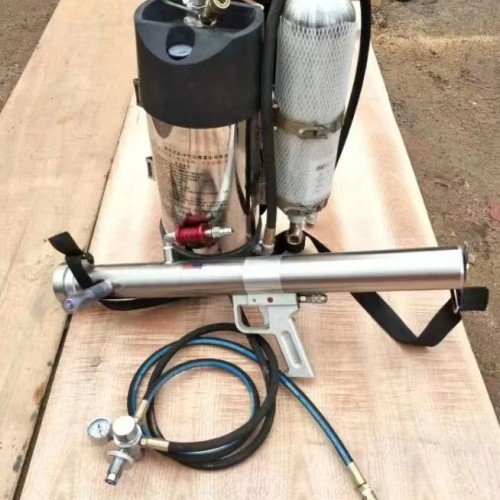
Additionally, in forest firefighting, the pulse pressure spray water gun is also commonly used for fire suppression and can be used in conjunction with rescue tripods and other equipment.