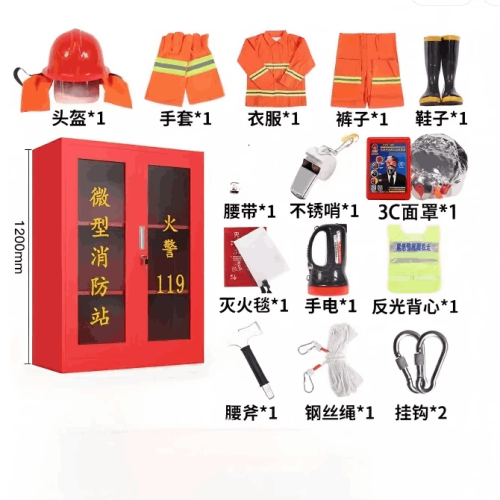
Confined space rescue equipment is a critical combination of equipment designed to ensure the safety of personnel entering enclosed spaces, underground pipelines, storage tanks, and other areas. It covers categories including gas detection, ventilation and displacement, communication, safety lifting, and medical first aid. The challenge in selection lies in the variable environments, strict standards, and the need to balance rapid response with reliability. This article provides a full-process reference from product understanding to procurement implementation, helping you equip your team with compliant equipment in one go.
Confined space rescue equipment is a complete systematic solution rather than a single device. Its core objective is to "ventilate first, detect second, work third," and to achieve rapid rescue in emergency situations.
Before configuration, detection parameters, protection levels, and rescue capabilities must be clearly defined. The following are reference ranges for key equipment; specific values should be determined based on actual environments and national standards.
| Equipment Category | Core Parameters | Configuration Notes |
|---|---|---|
| Gas Detector | Detection range: O₂ 0-30%VOL, CO 0-1000ppm, H₂S 0-100ppm, combustible gas 0-100%LEL | Four-in-one or five-in-one recommended, with audible and visual alarms, response time <30 seconds |
| Ventilation Equipment | Air volume 500-2000 m³/h, duct length 5-20 meters | Explosion-proof type, wear-resistant material, used for displacement and air supply |
| Communication Equipment | Intercom range 1-5 km (open area), explosion-proof rating Ex ib | Spare batteries required, headset support |
| Safety Rope and Tripod | Load capacity 150-300kg, rope length 10-30 meters, tripod height 1.8-2.5 meters | High-strength polyester or stainless steel material, with self-locking hooks |
| Positive Pressure Air Respirator | Cylinder volume 6.8-9L, usage time 30-60 minutes, wide field of view mask | Regular airtightness testing required, at least 1 spare cylinder |
| Rescue Tripod | Maximum working load 150-250kg, adjustable height 1.2-2.5 meters | Aluminum alloy material, with manual winch |
| Medical First Aid Kit | Includes tourniquet, bandages, splints, resuscitator, eye wash solution, etc. | Waterproof and dustproof material recommended, regularly check expiration dates |
| Full-Body Safety Harness | Load capacity 15-20kN, waist belt width 40-80mm | With rescue ring, quick to put on |
Localized procurement and deployment often face practical issues such as environmental differences, logistics timelines, and after-sales response. Advance planning can prevent project delays.
Selecting suppliers requires comprehensive consideration of qualifications, workmanship, testing, and after-sales service, rather than price alone.
A municipal company needed to desilt aging sewage pipelines, where the working space was narrow and hydrogen sulfide risks existed. They configured four-in-one gas detectors, high-power ventilators, rescue tripods, and positive pressure respirators, and conducted pre-operation training. During operations, the detectors provided timely alarms, ventilation equipment effectively reduced gas concentrations, and the entire process was completed without accidents, shortening the project duration by 30%.
In another case, during storage tank maintenance at a factory, communication between inside and outside personnel was lost due to the lack of communication equipment. After adding explosion-proof walkie-talkies and safety ropes, along with dedicated monitoring personnel, the safety factor of operations was significantly improved.
Confined space rescue equipment configuration requires systematic planning that balances detection, ventilation, protection, and rescue without weaknesses. When selecting, focus on qualifications and parameters; when procuring, consider local service and after-sales support; and strengthen personnel training. For professional advice, consult Longsheng'an Fire Protection (Tel: 13060031111), which provides equipment matching and bidding support. For more products such as mini fire cabinets, please visit the official website.